

What Is a Good Attendance Percentage to Maintain in College?
You check your portal on a Sunday night. It says 76 percent.
Relief hits first. You passed the line. Sleep feels easy.
I have been in that exact spot. In my BSCS days I tracked my attendance by hand in a notes app, and 76 felt like a win to me too. It was not. One fever in the next week, four classes gone, and I was writing sorry emails to teachers I barely knew.
Here is what I tell every student now. The minimum your college sets is a cliff edge, not a target. A good percentage sits above that edge, with room to fall and still land safe. This guide shows you where that safe zone starts, why it moves from college to college, and how to hold it without living in fear of the portal.
What is a good attendance percentage?
For most college students, a good attendance percentage is 80 to 85 percent. That sits above the common 75 percent minimum and leaves room for illness or a family emergency. If your college sets a higher bar, good means five to ten points above that bar instead.
Start with the floor most students live under. UGC rules in India ask for at least 75% of lectures, tutorials, seminars, and practicals before a student can sit for university exams. A lot of colleges copy that line word for word into their own handbooks.
But the floor moves. Guidebooks for Indian students list IITs at 75 to 80%, many medical courses at 80%, and some law schools near 70%. Private colleges often say 75% on paper and then enforce it hard. In Pakistan too, each university sets its own number in its own rules.
So good is a range, not one magic figure. Find your college minimum first. Then add room above it. That gap is the whole game.
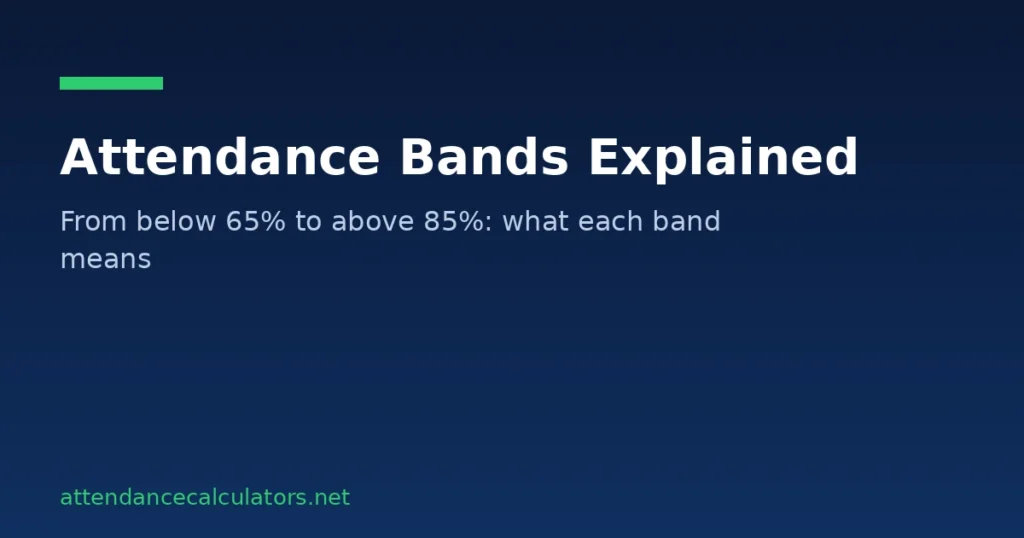
The bands: what your number really means
A single number tells you little on its own. Where it sits against your college line tells you a lot. Read your band below, then read the one under it. That second band is where one bad week can send you.
| Attendance band | What it really means |
|---|---|
| Below 65% | Critical. At most colleges you sit past the point where condonation can help. Exam entry is at risk. |
| 65% to 74% | Danger zone. You are below the common minimum. A strong run of classes plus a condonation case may save you at some colleges. Nothing is promised. |
| 75% to 79% | Eligible, but exposed. You can sit for exams at most colleges. One bad week can still push you under the line. |
| 80% to 84% | Good. You hold a small buffer for illness or travel, and most class days stop feeling like a threat. |
| 85% to 89% | Safe target for most students. Bunks become a choice you can plan, not a risk you take blind. |
| 90% and above | Very safe. Some colleges also put their top internal attendance marks in this band, though the exact marks change by college. |
Two things in that table catch students out. The first is the jump from 79% to 74%. It looks like five small points. In a short term it can be two sick days and one trip home.
The second is the top band. High attendance can pay you back in marks at some colleges, which I get to below. Safe and paid is a nice place to sit.
Why is the minimum a bad target?
The minimum is a bad target because life does not ask first. One week of fever, a family trip home, or a train strike can eat five to eight classes fast. Sit right on 75 percent and one bad week puts you under the line.
Do the class math and it gets plain fast. Say 100 classes are done and you sit at 80%. You can miss about 6 more classes and still hold 75%. At 85%, that spare room grows to about 13 classes. Same college, same rule, far less fear.
And the fall hurts more late in the term. Early on, each class moves your percentage a lot, so you can climb fast too. Late in the term the number turns stiff. A drop near exams is hard to repair, because few classes are left to repair it with.
This is why toppers of the bunk game still get caught. They count the classes they can skip. They forget to count the classes life will skip for them.
How much buffer do you actually need?
Most students need a buffer of five to ten points above their college minimum. At a 75 percent college, that means holding 80 to 85 percent. In class terms, 85 percent after 100 classes lets you miss about 13 more classes and stay at 75.
Your life sets the size of your buffer. Live far from home, with a long train ride each way? Take the bigger buffer. Trips home cost full days, not single classes.
Health counts too. If you fall sick often, or you manage a health issue that flares up without warning, plan for lost weeks before they happen. Sports, NCC, and cultural events eat days in blocks as well, even when the college later marks some of them as duty leave.
One more trap. If your college counts attendance per subject, your buffer must hold per subject. A fat overall buffer can hide one thin subject. Your weakest subject sets your real safety, so check that one first with the Semester Attendance Planner before you trust the big number.

Myth vs. Fact
Myth: 75% is good attendance, because that is what the college asks for.
Fact: 75% is the pass line for exam entry at many colleges. It is the lowest number that keeps you in the room. Good means a margin above the line, so a bad week bends your term instead of breaking it.
Myth: Attendance only decides if you can sit for exams.
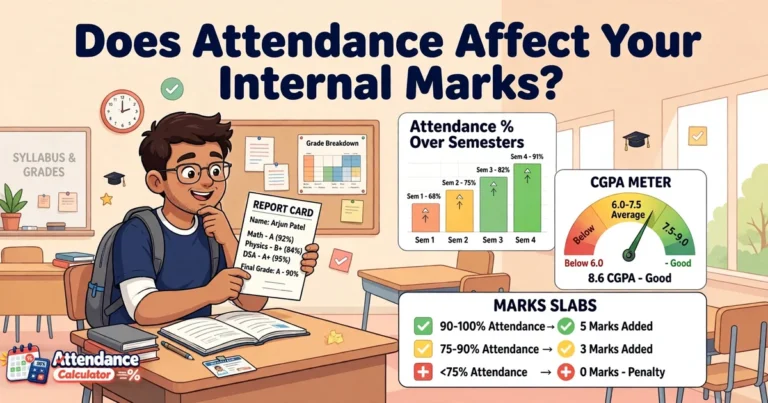
Fact: At many colleges it also feeds internal marks. One university pattern I checked gives 10 of 50 theory marks to attendance, and some colleges bar students below 75% from internal tests at all. The split changes by college. The risk is real either way.
Myth: Scholarships and placements care about marks alone.
Fact: Some do not. One large institute in Mumbai asks for attendance above 75% to renew a merit scholarship. Some colleges ask for 75% attendance with no backlogs before they give placement help. Read the fine print on yours early, while you can still act on it.
How do you hold a good percentage all term?
Check your number every two weeks, front-load classes early in the term, and spend bunks only from your buffer, never from the minimum. Early classes build the cushion that carries you through a sick week or a family emergency later in the term.
First, know your exact line. Read your handbook or ask your class teacher what your college asks for, overall and per subject. Guesses start most attendance messes I have seen.
Second, bank classes while the term is young. The first month feels light, and that is the point. Each class you attend early buys you calm in month three, when tests, fests, and fevers all land at once.
Third, check with a tool, not with a feeling. Run your attended and total classes through the Attendance Calculator every two weeks. Feelings lie in both ways. Some students panic at a safe 82%. Some relax at a risky 76%.
Last, guard the buffer like money in a tight month. A planned bunk for a family event is a fair spend. Three lazy Mondays in a row is a leak. Leaks sink more students than fevers do.

Below the line already: your honest options
If your number sits under your college minimum today, a good target will not save this term on its own. You need a count, a streak, and a talk with your department, in that order.
Count first. Work out how many classes are left and how many you must attend in a row to climb back. If the math says the climb is still on, attend like it is your job. No gaps, no half days.
If the math says the climb is gone, ask about condonation while time is left. I wrote the full steps, papers, and limits in my guide on what attendance condonation is and how to apply. Read it before you walk into the office, not after.
And hear this plainly. Some terms cannot be saved. A repeat done early, with a plan, costs less than a year lost to hope and late forms. I say that as someone who has sat on the wrong side of this number. It stings. It is still cheaper than guessing.
Questions students ask about good attendance
Is 75% attendance good enough in college?
It is enough to sit for exams at many colleges, but it is not good. At 75 percent you have zero room left. One sick week can drop you below the line and into a fight for condonation, which no college has to grant you.
Is 80% a good attendance percentage?
Yes, for most students at a 75 percent college, 80 percent is a solid place to sit. It keeps you clear of the exam line and gives you a few spare classes for illness or travel. If your program sets 85 percent, aim higher than that.
What is the minimum attendance in most Indian colleges?
Most Indian colleges ask for 75 percent, a line tied to UGC rules for lectures, tutorials, and practicals. Some set the bar higher, like medical courses at 80 percent, and a few set it lower. Your own handbook is the only answer that counts for you.
Does good attendance help with internal marks?
At many colleges, yes, in a small but real way. Some universities give a set slice of internal marks for attendance, and some bar students below 75 percent from internal tests. The exact split changes by college, so read your scheme of marks early.
Does attendance affect scholarships and placements?
At some colleges, yes. Scholarship renewal rules at some institutes ask for attendance above 75 percent, and some colleges ask for 75 percent with no backlogs for placement help. These are college rules, not national ones, so check yours before you relax too much.
Set your number today
Do not leave this page with a vibe. Leave with a number.
Take your college minimum. Add five points if your life is calm and you live near campus. Add ten if you travel far, fall sick often, or play sports for the college. That sum is your personal good percentage for this term.
Write it where you will see it, then check your real number against it every two weeks. The students who stay safe are not the ones who never bunk. They are the ones who always know their number before they bunk.





One Comment